What is Machine Learning?
Machine learning is the technique where software improves at a task by practising on lots of examples, without being told the rules.
Think of it like this
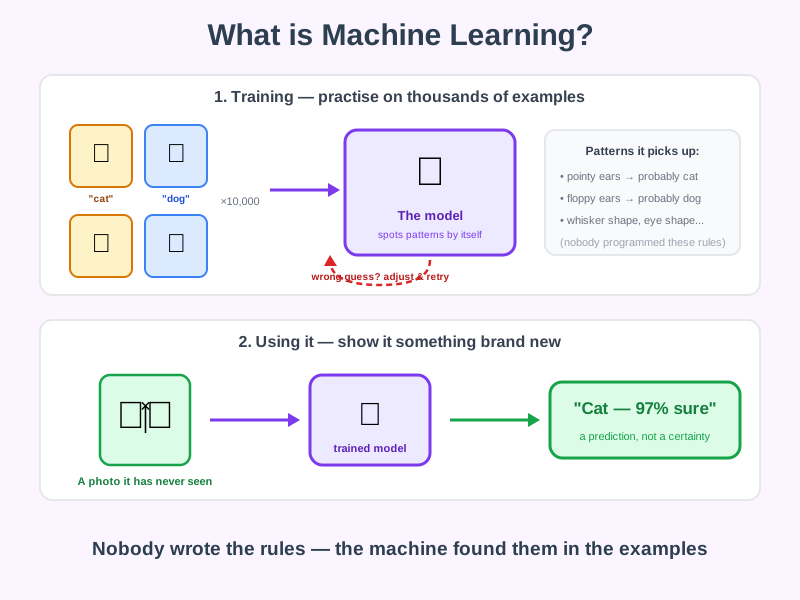
Think about how a child learns to recognise cats. Nobody hands them a rulebook saying "pointy ears plus whiskers equals cat" - they just see lots of cats, get corrected when they point at a dog, and gradually get it right. Machine learning works the same way: show the software thousands of labelled examples, let it guess, correct it, and repeat until it's good.
What's happening
Summary
Instead of programmers writing the rules, machine learning lets the computer find the rules itself by practising on huge numbers of examples - then apply them to things it has never seen.
A Closer Look
The process has two distinct phases. During training, the model makes a guess for each example, gets told how wrong it was, and nudges its internal settings to do slightly better next time - repeated millions of times. Once trained, the model is just used: it takes new input and produces a prediction, fast and cheaply. The expensive learning happened beforehand.
This is the engine behind most of what gets called AI today: spam filters trained on millions of emails, photo apps that find "all pictures of the dog," voice assistants trained on recorded speech, and chatbots trained on enormous amounts of text. The output is always a prediction with a confidence level, not a certainty - which is why these systems are impressive most of the time and confidently wrong some of the time.
Common Misconceptions
- The machine doesn't "understand" anything - it has found statistical patterns in examples, which is powerful but very different from human comprehension.
- Machine learning isn't always learning - most models are trained, frozen, and then periodically retrained on fresh data, rather than changing in real time with every click you make.
- It's not magic or neutral - a model is only as good as its examples, and if the training data contains mistakes or biases, the model faithfully learns those too.
How it connects
Machine learning is the technique powering modern AI:
Try it yourself
Visit teachablemachine.withgoogle.com - a free Google tool where you can train a real machine learning model in your browser in about two minutes. Use your webcam to teach it two poses (say, thumbs up and thumbs down), and watch it learn to tell them apart from your examples alone.