What is AI?
AI is software that learns patterns from lots of data and uses them to make guesses or decisions.
Think of it like this
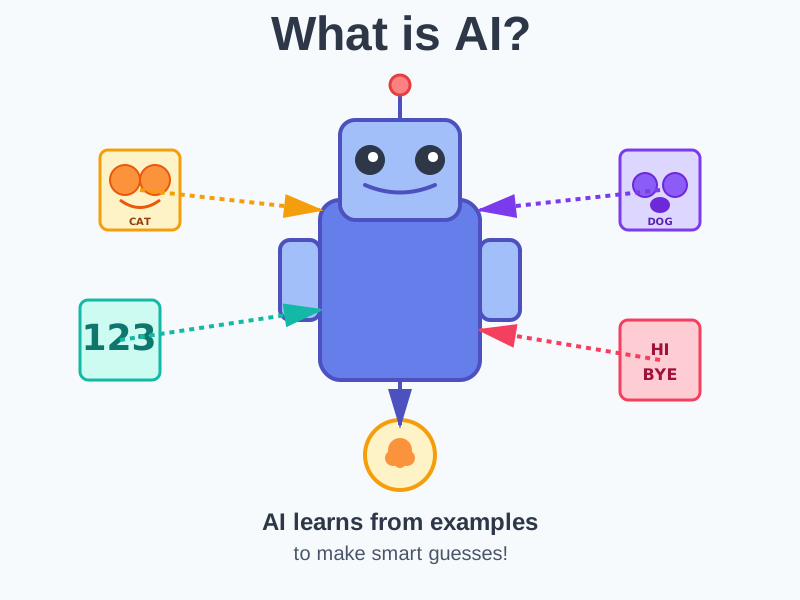
It's like a student who learns by studying thousands of worked examples instead of memorising a rulebook. Show them enough past answers and they start spotting the patterns - good enough to tackle questions they've never seen before, but still capable of a confident wrong answer when a question doesn't fit what they learned.
What's happening
Summary
AI is software that learns patterns from data instead of following hand-written rules - which makes it remarkably flexible, and also means it can be confidently wrong.
A Closer Look
Artificial intelligence is a broad label for software that does tasks we usually associate with human thinking: recognising faces in photos, understanding speech, translating languages, recommending what to watch next, or holding a conversation. Traditional software follows rules a programmer wrote down step by step. Most modern AI works differently - instead of being given the rules, it's shown huge numbers of examples and works out the patterns itself, a technique called machine learning.
Today's AI ranges from narrow tools that do exactly one job, like a spam filter, to chatbots flexible enough to write, summarise, and answer questions on almost any subject. But they share the same underlying approach: they produce the answer that best fits the patterns in the data they learned from. That's why AI is only as good as its training data - gaps or biases in the examples show up in the results - and why even very capable systems can give a fluent, confident answer that turns out to be wrong.
Common Misconceptions
- AI isn't actually conscious or thinking - it's sophisticated pattern matching, not understanding.
- AI isn't one technology - it's a broad category covering many different techniques like machine learning, neural networks, and large language models.
- AI can be wrong - it generates plausible-sounding answers based on patterns, not verified facts.
How it connects
AI needs significant infrastructure to run:
Try it yourself
Ask any chatbot a question - you're directly interacting with an AI model. Notice how it responds fluently, but sometimes confidently gets things wrong.