What is a Database?
A database is an organised store of information that apps can search, read, and update instantly.
Think of it like this
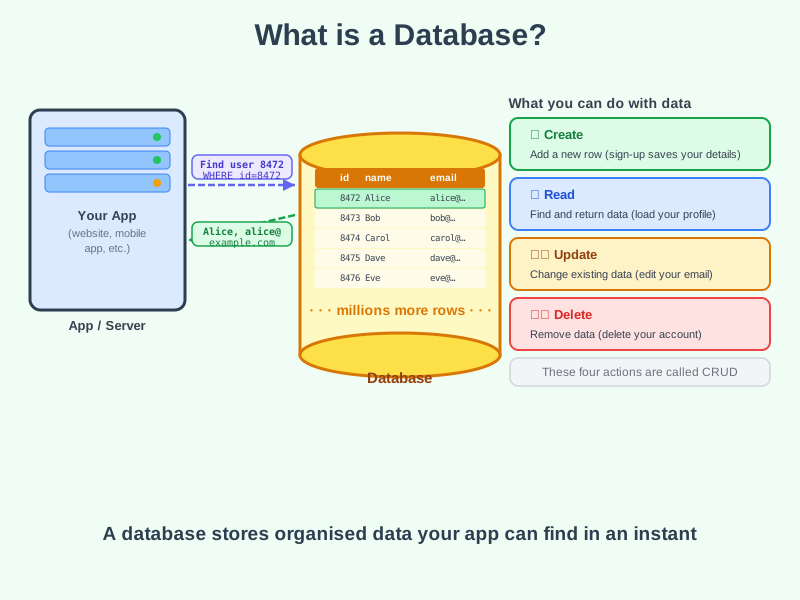
It's like a giant, perfectly organised filing cabinet - every piece of information has its own labelled slot, and you can find exactly what you need in a fraction of a second, even if there are millions of files inside.
What's happening
Summary
A database stores structured information so that apps can retrieve exactly the right data the moment they need it.
A Closer Look
Most databases store data in tables - rows and columns, much like a spreadsheet. Each row is one record (one user, one order, one product) and each column is a piece of information about it (name, email, date). When an app needs data, it sends a query - a precise question like "give me all orders placed today" - and the database finds the matching rows almost instantly, even across millions of records.
Every action an app takes with data fits into one of four categories, known as CRUD: Create (add), Read (find), Update (change), Delete (remove). When you sign up for a website, your details are Created. When you load your profile, they are Read. When you change your password, it is Updated. When you close your account, your data is Deleted.
Common Misconceptions
- A database is not the same as a spreadsheet - databases are built for apps to query at speed, with strict rules to keep data consistent across millions of rows.
- Data is not stored "in the cloud" by magic - it lives in a database running on a server, somewhere physical in the world.
- Deleting your account does not always immediately delete your data - many services keep it for a period for legal or backup reasons.
How it connects
A database sits at the heart of almost every app or website:
Try it yourself
Every time you search for something on a website, filter results, or load a page that shows your name - a database query just ran. Next time you sign up for a service, picture your details being inserted as a new row in a table somewhere on a server.