What is a Blockchain?
A blockchain is a shared list of records that many computers all keep a copy of, making it very hard to tamper with.
Think of it like this
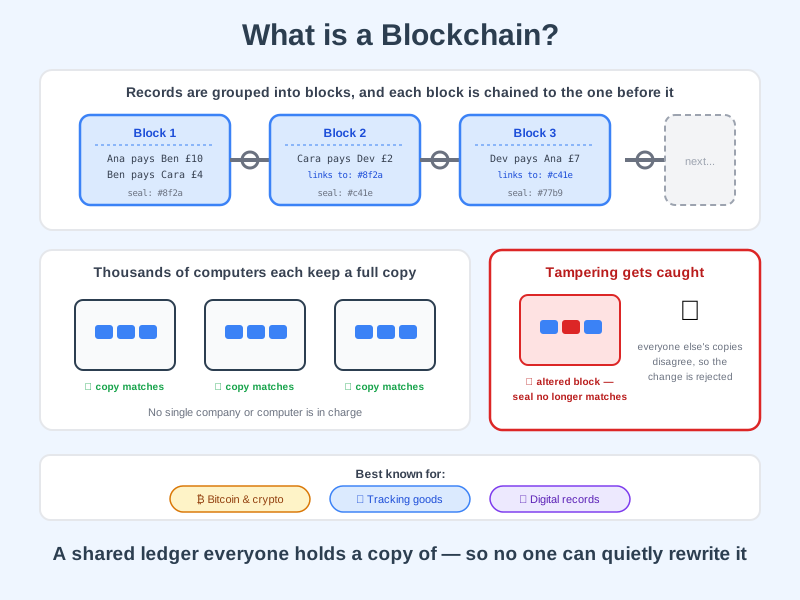
Imagine a village ledger of who paid whom - but instead of one book kept at the town hall, every villager keeps their own identical copy. When a new payment happens, everyone writes it down. If someone sneakily edits their own book to say they're richer, a quick comparison with everyone else's copies exposes the lie instantly.
What's happening
Summary
A blockchain is a record book duplicated across thousands of computers, where each page is mathematically sealed to the previous one - so rewriting history would mean fooling everyone at once.
A Closer Look
The name describes the structure: records are grouped into blocks, and each new block contains a mathematical fingerprint (a hash) of the block before it, forming a chain. Change anything in an old block and its fingerprint changes, which breaks the link to every block after it - that's what makes tampering so detectable.
The second trick is that no single computer is in charge. Thousands of independent computers hold full copies and must agree before a new block is added. This is why blockchains power Bitcoin and other cryptocurrencies: they let strangers agree on who owns what without needing a bank in the middle. The same idea is used for tracking goods through supply chains and keeping verifiable records.
Common Misconceptions
- Blockchain and Bitcoin are not the same thing - Bitcoin is one application of blockchain, the way email is one application of the internet.
- Blockchains are not anonymous - most are completely public; anyone can read every transaction ever made, just attached to account numbers rather than names.
- "Tamper-proof" doesn't mean "true" - a blockchain faithfully preserves whatever is written into it, including mistakes and lies; it guarantees the record hasn't changed, not that it was correct.
How it connects
A blockchain combines ideas from several other topics:
Try it yourself
Visit blockchain.com/explorer - a window onto the real Bitcoin blockchain. You can watch genuine transactions being added to new blocks in real time, and click any block to see exactly what it contains. The whole ledger really is public.